
How Companionship Care Supports Mental Wellbeing in Older Adults
As we grow older, emotional wellbeing becomes just as important as physical health. Yet for many older adults, feelings of loneliness can quietly take hold.
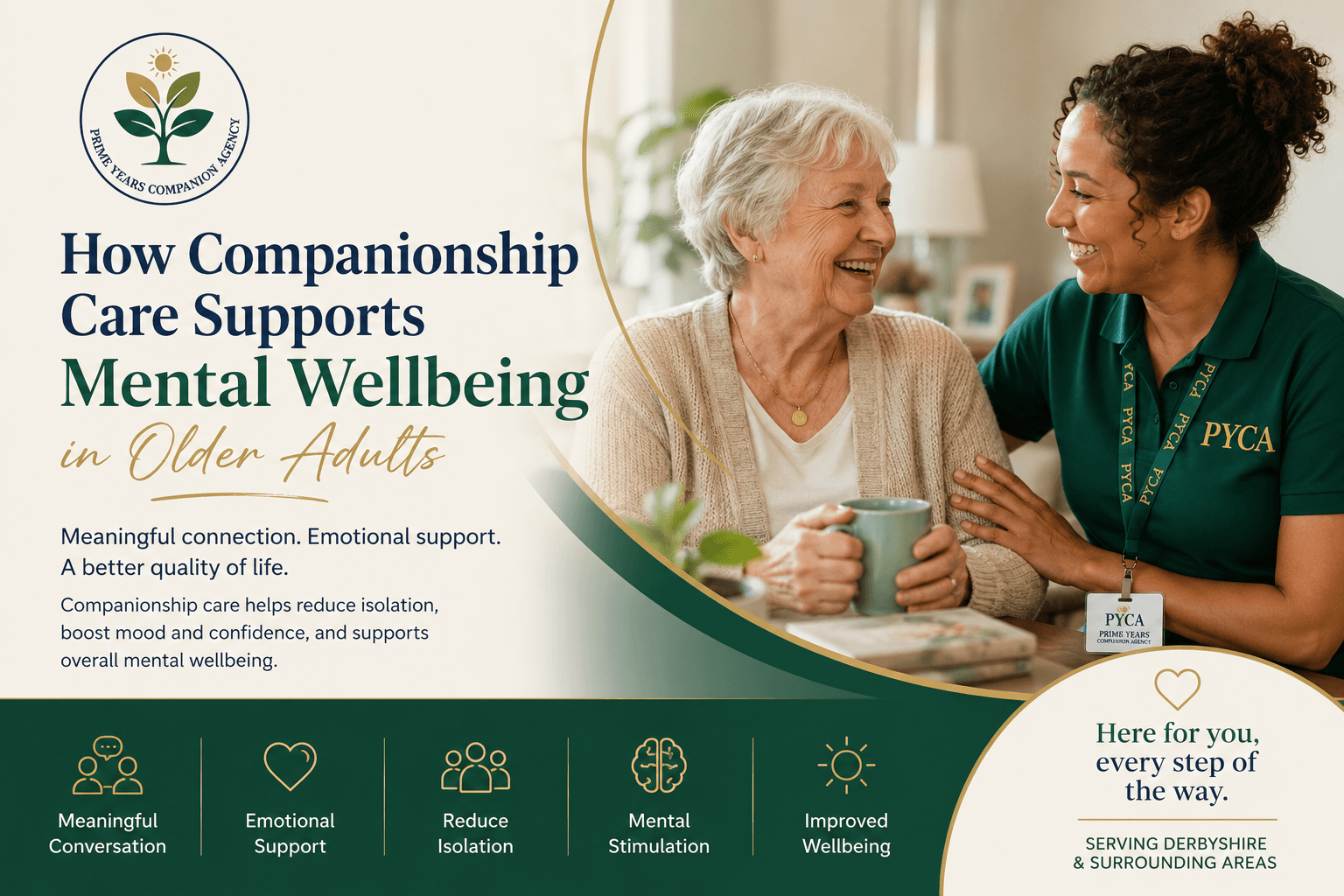
As we grow older, emotional wellbeing becomes just as important as physical health. Yet for many older adults, feelings of loneliness, low mood or disconnection can quietly take hold — and go unnoticed by the people who care about them most.
The scale of this is striking. A 2024 national poll by Michigan Medicine found that around one in three adults aged 50–80 experience significant loneliness. The CDC has linked social isolation to a 50% increased risk of developing dementia, as well as higher rates of depression, anxiety, heart disease and early mortality. These are not just statistics — they are the quiet realities behind many families' concerns.
At Prime Years Care Agency, we believe that meaningful human connection is one of the most powerful things we can offer an older adult. Companionship care is not simply about having someone present — it is about helping people feel heard, valued, supported and emotionally connected to life.
Understanding Mental Wellbeing in Later Life
Mental wellbeing shapes how we think, feel and engage with the world around us. For many older adults, significant life changes — retirement, bereavement, reduced mobility, a health diagnosis, or living alone — can gradually erode emotional health in ways that are easy to miss.
Take someone like Margaret, a retired schoolteacher from Chesterfield whose husband passed away three years ago. Her family visited when they could, but busy working lives meant the gaps between visits grew longer. Margaret remained physically well, but she had stopped going to her weekly choir group, rarely cooked proper meals, and found herself watching television most of the day — not because she wanted to, but because there was nothing else to look forward to. What she needed wasn't medical care. She needed connection.
Margaret's experience is far from unusual. Common emotional challenges among older adults include:
- Loneliness and social isolation
- Anxiety or persistent low mood
- Loss of confidence and motivation
- Reduced social interaction and community involvement
- Feelings of disconnection from family or a sense of purpose
Families often notice physical changes first. The emotional impact can be much harder to see — and just as significant.
Why Human Connection Makes a Difference
Routine companionship provides a reliable source of social interaction, which is a key pillar of mental wellbeing. Having someone to talk to, share a meal with, or accompany you on a walk can drastically improve your mood and outlook on life. It's about bringing joy and purpose back into the everyday.